ISO 42001 AI Management Certification Guide (2026)
The first international standard for an AI Management System — what it covers, who needs it, the Lead Auditor vs Lead Implementer paths, and how it slots into EU AI Act compliance.
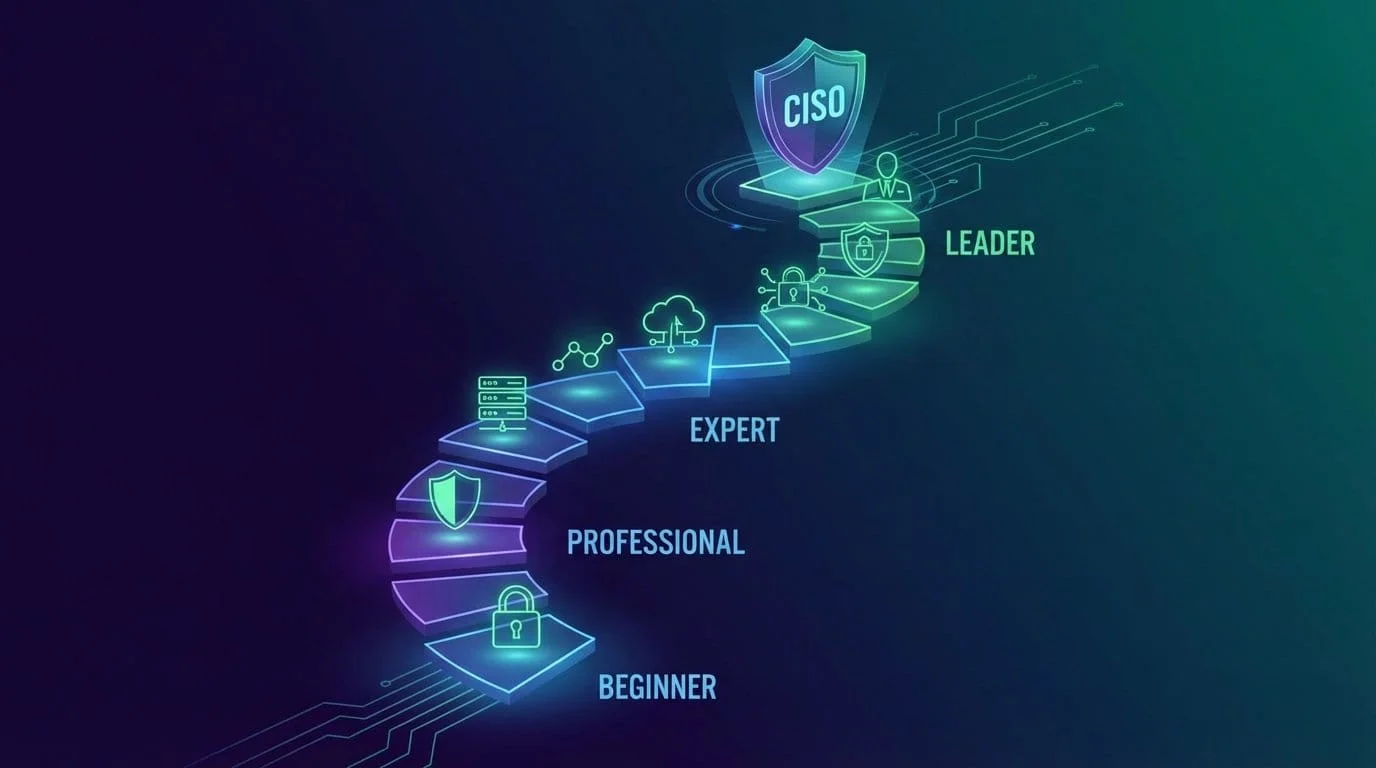
Table of Contents
What is ISO/IEC 42001?
ISO/IEC 42001:2023 is the world's first international standard for an Artificial Intelligence Management System (AIMS). Published December 2023 by ISO and IEC, it provides a Plan-Do-Check-Act framework — modeled on ISO 9001 (quality) and ISO 27001 (information security) — for organizations that develop, deploy, or use AI systems.
It is a Type-A management system standard, meaning organizations can be third-party certified against it. By 2026 the early certifications (BSI, A-LIGN, Schellman, KPMG) have established benchmark patterns and the certification market is in its first real growth wave.
The plain-English version: if your company uses or sells AI, ISO 42001 gives you a recognized way to prove "we govern this responsibly" to customers, regulators, and procurement teams.
Why It Matters in 2026
Three forces converged through 2024-2026:
- EU AI Act enforcement. The Act's high-risk system obligations bit on August 2, 2026. ISO 42001 is the fastest credible documentation framework for proving conformance.
- Enterprise procurement gates. Fortune 500 buyers added "ISO 42001 certified or roadmap" clauses to vendor questionnaires through 2025.
- Regulator alignment. NIST AI RMF 1.1, Singapore Model AI Governance, UK AI Cyber Security Code of Practice, and Korean AI guidelines all map cleanly to ISO 42001.
The market reality: by mid-2026, "Are you ISO 42001 certified or implementing it?" is showing up in roughly 40% of enterprise AI vendor RFPs in the EU and ~25% in North America. Two years out, expect parity with ISO 27001.
The 10 Clauses + Annex A Controls
ISO 42001 follows the standard High-Level Structure (HLS) familiar from ISO 27001 and ISO 9001:
Boilerplate. Important to read once because the AI-specific terminology (AI system, AI life cycle, intended use) is locked in here.
Define the AIMS scope, internal/external issues, interested parties. AI-specific addition: AI roles (provider, deployer, user, partner).
Top management commitment, AI policy, roles and responsibilities. The "responsible AI" sign-off has to be real and documented.
AI risk assessment, AI system impact assessment (the AI-specific addition), objectives and how to achieve them.
Resources, competence, awareness, communication, documented information.
Operational planning, AI system impact assessment in practice, AI life-cycle controls.
Monitoring, internal audit, management review.
Nonconformity, corrective action, continual improvement.
Annex A: 38 Controls Across 9 Categories
This is where the AI-specific work lives. Categories include: AI policies, internal organization, resources for AI systems, impact assessment, AI system life cycle, data for AI systems, information for interested parties, use of AI systems, and third-party relationships.
Highest-effort controls in practice: A.6.1 (AI system impact assessment), A.7.x (data quality and provenance), A.10.x (third-party AI assurance — surprisingly hard once you start asking foundation model vendors for documentation).
ISO 42001 vs EU AI Act
An international management system standard. Voluntary. Achievable through third-party certification. Maps to AI risk management broadly across all AI systems.
EU regulation. Mandatory for AI systems placed on the EU market. Risk-tiered (prohibited, high-risk, limited-risk, minimal). Conformity assessment required for high-risk systems.
Overlap: roughly 60-70% of EU AI Act documentation requirements (risk management, data governance, technical documentation, transparency, human oversight, post-market monitoring) map directly to ISO 42001 clauses and Annex A controls.
Gap: EU AI Act has prohibited-AI-practices and CE-marking obligations that ISO 42001 does not address. ISO 42001 is necessary but not sufficient for EU AI Act conformance on high-risk systems.
ISO 42001 vs ISO 27001
If you already have ISO 27001 (information security), ISO 42001 is dramatically easier. The HLS is identical, your governance forum can extend to cover AI, your risk methodology already exists, and your internal audit program is already ticking.
Lead Implementer vs Lead Auditor
For internal AI governance, compliance, and security teams. Covers gap analysis, risk and impact assessment, control selection, internal audit prep. Bigger market in 2026 because most organizations are at the build stage. Typical buyers: GRC managers, AI governance leads, CISOs adding AI to their remit.
For external auditors at certification bodies, internal auditors at large enterprises, and consultants. Covers ISO 19011 audit principles applied to AIMS, evidence sampling, audit reporting. Smaller but higher-rate market. Most candidates already hold ISO 27001 Lead Auditor.
Most common 2026 path: ISO 27001 Lead Implementer → ISO 27001 Lead Auditor → ISO 42001 Lead Implementer (transition course, 3 days). Then add ISO 42001 Lead Auditor if you work for a certification body.
Training Bodies & Cost
5-day Lead Implementer ($2,500-3,500) and 5-day Lead Auditor ($2,500-3,500). Most candidates choose PECB for the recognized credential. Exam is computer-based, 12 essay-style scenarios.
Strong reputation in EU/UK, premium pricing ($3,500-5,500). Useful if your organization is being audited by BSI as the certification body.
ISO 42001 Foundation ($150-300). Good entry point for non-GRC engineers wanting to understand the standard.
Free or low-cost overviews. Useful for vocabulary; not a recognized credential.
Implementation Timeline (Mid-Size SaaS)
Pair with Hands-On AI Security Practice
ExamCertAI has free practice for the security and AI governance certifications that pair naturally with ISO 42001 — CISSP, CCSP, AWS Security Specialty, Azure SC-100.
Launch ExamCertAI →Plan Your AI Governance Stack
Use our free tools to build a security + AI governance certification ladder
Frequently Asked Questions
What is ISO/IEC 42001?
ISO/IEC 42001:2023 is the world's first international standard for an Artificial Intelligence Management System (AIMS). Published in December 2023, it gives organizations a Plan-Do-Check-Act framework to govern AI development, deployment, and operation. By 2026 it is the de facto AI governance standard for enterprises selling into regulated markets and the EU.
Is ISO 42001 the same as the EU AI Act?
No. ISO 42001 is a voluntary management standard. The EU AI Act is enforceable EU law. They overlap heavily — implementing ISO 42001 covers around 70% of EU AI Act high-risk system documentation requirements and is the fastest credible path to demonstrating AI Act conformance for high-risk systems in 2026.
What is the difference between ISO 42001 Lead Auditor and Lead Implementer?
Lead Implementer trains you to build an AIMS inside an organization — gap analysis, risk assessment, controls, internal audit prep. Lead Auditor trains you to audit an existing AIMS for certification or surveillance. Implementer is the bigger market in 2026 because most organizations are still building their AIMS for the first time.
How long does ISO 42001 implementation take?
For a mid-size organization with an existing ISO 27001 ISMS, 6-9 months to implementation and 9-15 months to first external certification audit. Greenfield (no existing management systems) typically 12-18 months. The longest poles are AI risk register, impact assessments per AI system, and supplier AI assurance.
Stack Security Certs With AI Governance
ExamCertAI covers CISSP, CCSP, AWS Security, Azure SC-x, and the cybersecurity ladder you'll layer ISO 42001 on top of.
Try ExamCertAI Free →
Stack Security Certs With AI Governance
CISSP, CCSP, AWS Security, Azure SC-100 — the security ladder ISO 42001 sits on. ExamCertAI has them all, free.